Email id
combatgamesindia@hotmail.com

Phone Number
+91-9138313522
+91-9813313522
Karate is a Japanese martial art that originated in the Ryukyu Kingdom (modern‑day Okinawa). The name combines kara (empty) and te (hand), meaning “empty hand” – reflecting its nature as a weaponless system of self‑defence. Beyond the literal translation, kara also carries a philosophical connotation: emptying the mind of selfishness, evil, and distraction.
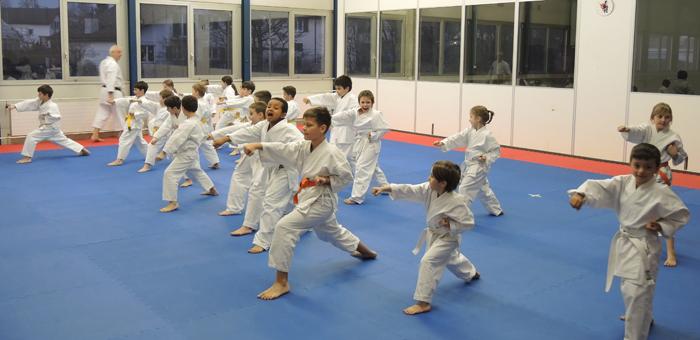
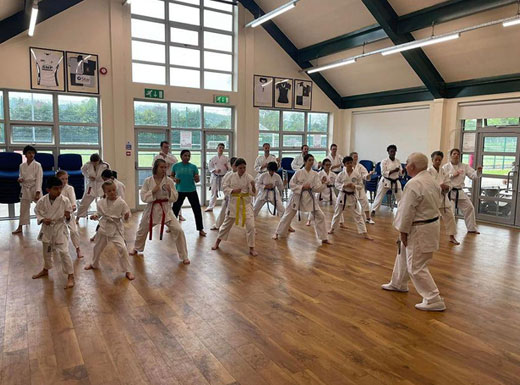
Karate is more than just a martial art—it's a way to build confidence, discipline, respect, and physical strength. Our training programs are designed for children, teenagers, and adults of all skill levels.
Under the guidance of experienced instructors, students develop self-defense skills, improve fitness, and learn important life values such as perseverance, focus, and teamwork in a safe and encouraging environment.
Karate uses kicking, striking, and defensive blocking with the arms and legs. Power is generated by concentrating the body's energy at the moment of impact. Striking surfaces include the knuckles, the outer edge of the hand (shuto), the ball of the foot, the heel, the forearm, the knee, and the elbow.
Training is traditionally divided into three main components:
Two distinctive concepts are emphasised:
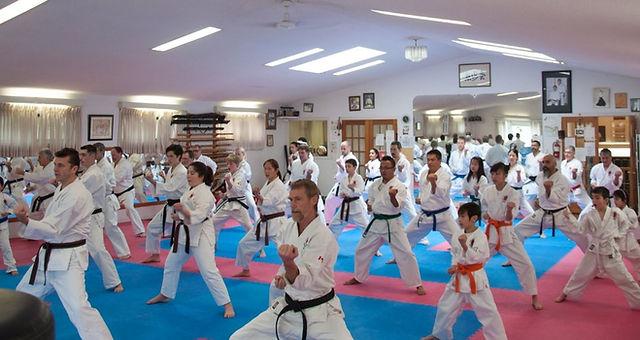
Karate uses a kyū / dan ranking system. Beginners start with a white belt and progress through various colours (e.g., yellow, green, blue, purple, brown) before reaching black belt (shodan), which signifies advanced skill. The highest achievable rank is 10th‑degree black belt.
Karate places great importance on mental attitude, courtesy, and self‑improvement.
Funakoshi’s famous maxim, Karate begins and ends with politeness,
underlines the central role of respect.
The art is strictly defensive; it forbids aggressive or offensive use. The ultimate goal is not victory over an opponent,
but the cultivation of character and the overcoming of one’s own physical and spiritual limitations.
Karate made its Olympic debut at the Tokyo 2020 Summer Games (held in 2021). Today, it is practised by over 130 million people across the globe, in both traditional dojo settings and competitive sporting formats.